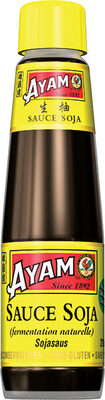

Sauce Soja - Ayam - 210 ml
Aquesta pàgina del producte no està completa. Podeu ajudar a completar-la editant-la i afegint-hi més dades a partir de les fotos ja disponibles, o fent-ne més amb l'aplicació de androide o iPhone / iPad. Gràcies!
×
Codi de barres: 9556041611138 (EAN / EAN-13)
Quantitat: 210 ml
Empaquetament: en:Bottle or vial, Vidre, en:Bottle
Marques: Ayam
Categories: Condiments, Salses, en:Soy sauces, en:Groceries
Etiquetes, certificacions, premis:
Lliure de gluten, Crossed Grain Trademark, Sense transgènics, Sense conservants, Eco-Score, Eco-Score A, Sense potenciador de sabor, Sense Glutamat Monosòdic, Afdiag, Triman
Origen dels ingredients: Malàisia
Llocs de fabricació o processament: Malaisie
Enllaç a la pàgina del producte en el lloc oficial del productor: http://www.ayam.fr/fr/asian-sauces/506-s...
Botigues: Super U, Woolworths, carrefour.fr, Coles
Països on es va vendre: Austràlia, Bèlgica, França, Nova Zelanda, Espanya
Matching with your preferences
Salut
Ingredients

Processament d'aliments
-

Aliments ultra processats
Elements que indiquen que el producte està al grup 4 - Aliments i begudes ultraprocessats:
- Additiu: E150a - Colorant de caramel
Els productes alimentaris es classifiquen en 4 grups segons el seu grau de processament:
- Aliments no processats o mínimament processats
- Ingredients culinaris processats
- Aliments processats
- Aliments ultra processats
La determinació del grup es fa en funció de la categoria del producte i dels ingredients que conté.
Additius
Anàlisi dels ingredients
-

No conté oli de palma
No s'han detectat ingredients que continguin oli de palma
Ingredients no reconeguts: en:dyesAlguns ingredients no s'han pogut reconèixer.
Necessitem la teva ajuda!
Podeu ajudar-nos a reconèixer més ingredients i analitzar millor la llista d'ingredients d'aquest producte i d'altres mitjançant:
- Editeu aquesta pàgina de producte per corregir les faltes d’ortografia de la llista d’ingredients i/o per eliminar els ingredients d’altres idiomes i frases que no estiguin relacionades amb els ingredients.
- Afegiu entrades, sinònims o traduccions noves a les nostres llistes multilingües d’ingredients, mètodes de processament d’ingredients i etiquetes.
Uniu-vos al canal #ingredients del nostre espai de discussió a Slack i/o apreneu sobre l'anàlisi dels ingredients en la nostra wiki, si voleu ajudar. Gràcies!
-

Es desconeix si és vegà
Ingredients no reconeguts: en:dyesAlguns ingredients no s'han pogut reconèixer.
Necessitem la teva ajuda!
Podeu ajudar-nos a reconèixer més ingredients i analitzar millor la llista d'ingredients d'aquest producte i d'altres mitjançant:
- Editeu aquesta pàgina de producte per corregir les faltes d’ortografia de la llista d’ingredients i/o per eliminar els ingredients d’altres idiomes i frases que no estiguin relacionades amb els ingredients.
- Afegiu entrades, sinònims o traduccions noves a les nostres llistes multilingües d’ingredients, mètodes de processament d’ingredients i etiquetes.
Uniu-vos al canal #ingredients del nostre espai de discussió a Slack i/o apreneu sobre l'anàlisi dels ingredients en la nostra wiki, si voleu ajudar. Gràcies!
-

Es desconeix si és vegetarià
Ingredients no reconeguts: en:dyesAlguns ingredients no s'han pogut reconèixer.
Necessitem la teva ajuda!
Podeu ajudar-nos a reconèixer més ingredients i analitzar millor la llista d'ingredients d'aquest producte i d'altres mitjançant:
- Editeu aquesta pàgina de producte per corregir les faltes d’ortografia de la llista d’ingredients i/o per eliminar els ingredients d’altres idiomes i frases que no estiguin relacionades amb els ingredients.
- Afegiu entrades, sinònims o traduccions noves a les nostres llistes multilingües d’ingredients, mètodes de processament d’ingredients i etiquetes.
Uniu-vos al canal #ingredients del nostre espai de discussió a Slack i/o apreneu sobre l'anàlisi dels ingredients en la nostra wiki, si voleu ajudar. Gràcies!
-

Detalls de l'anàlisi dels ingredients
Necessitem la teva ajuda!
Alguns ingredients no s'han pogut reconèixer.
Necessitem la teva ajuda!
Podeu ajudar-nos a reconèixer més ingredients i analitzar millor la llista d'ingredients d'aquest producte i d'altres mitjançant:
- Editeu aquesta pàgina de producte per corregir les faltes d’ortografia de la llista d’ingredients i/o per eliminar els ingredients d’altres idiomes i frases que no estiguin relacionades amb els ingredients.
- Afegiu entrades, sinònims o traduccions noves a les nostres llistes multilingües d’ingredients, mètodes de processament d’ingredients i etiquetes.
Uniu-vos al canal #ingredients del nostre espai de discussió a Slack i/o apreneu sobre l'anàlisi dels ingredients en la nostra wiki, si voleu ajudar. Gràcies!
en: soybeans 33%, rice flour, water, salt, sugar, dyes (e150a), acidifiers (e260, e270)- soybeans -> en:soya-bean - vegan: yes - vegetarian: yes - ciqual_food_code: 20901 - percent_min: 33 - percent: 33 - percent_max: 33
- rice flour -> en:rice-flour - vegan: yes - vegetarian: yes - ciqual_food_code: 9520 - percent_min: 11.1666666666667 - percent_max: 33
- water -> en:water - vegan: yes - vegetarian: yes - ciqual_food_code: 18066 - percent_min: 6.8 - percent_max: 33
- salt -> en:salt - vegan: yes - vegetarian: yes - ciqual_food_code: 11058 - percent_min: 0.25 - percent_max: 15.9
- sugar -> en:sugar - vegan: yes - vegetarian: yes - ciqual_proxy_food_code: 31016 - percent_min: 0 - percent_max: 11
- dyes -> en:dyes - percent_min: 0 - percent_max: 11
- e150a -> en:e150a - vegan: yes - vegetarian: yes - percent_min: 0 - percent_max: 11
- acidifiers -> en:acid - percent_min: 0 - percent_max: 11
- e260 -> en:e260 - vegan: yes - vegetarian: yes - percent_min: 0 - percent_max: 11
- e270 -> en:e270 - vegan: yes - vegetarian: yes - percent_min: 0 - percent_max: 5.5
Nutrició
-

Poca qualitat nutricional
⚠ ️Atenció: la quantitat de fibra no s'especifica, no es tindrà en compte la seva possible contribució positiva en la qualificació.⚠ ️Atenció: la quantitat de fruita, verdura i fruits secs no s'especifica a l'etiqueta, s'ha fet una estimació a partir de la llista d'ingredients: 33Aquest producte no es considera una beguda per al càlcul de la Nutri-Score.
Punts positius: 0
- Proteïnes: 2 / 5 (valor: 4.5, valor arrodonit: 4.5)
- Fibra: 0 / 5 (valor: 0, valor arrodonit: 0)
- Fruites, verdures, fruits secs i olis de colza/nou/oliva: 0 / 5 (valor: 33, valor arrodonit: 33)
Punts negatius: 12
- Energia: 0 / 10 (valor: 282, valor arrodonit: 282)
- Sucres: 2 / 10 (valor: 11, valor arrodonit: 11)
- Greixos saturats: 0 / 10 (valor: 0, valor arrodonit: 0)
- Sodi: 10 / 10 (valor: 6360, valor arrodonit: 6360)
Els punts per proteïnes no es compten perquè els punts negatius són més o iguals a 11.
Puntuació nutricional: (12 - 0)
Nutri-Score:
-

Nivells de nutrients
-

Greix en baixa quantitat (0%)
Què us cal saber- Un alt consum de greixos, especialment de greixos saturats, pot augmentar el colesterol, que augmenta el risc de patir malalties del cor.
Recomanació: Reduïu el consum de greixos i greixos saturats- Trieu productes amb menys greixos i greixos saturats.
-
Àcid gras saturat en baixa quantitat (0%)
Què us cal saber- Un alt consum de greixos, especialment de greixos saturats, pot augmentar el colesterol, que augmenta el risc de patir malalties del cor.
Recomanació: Reduïu el consum de greixos i greixos saturats- Trieu productes amb menys greixos i greixos saturats.
-

Sucre en Quantitat moderada (11%)
Què us cal saber- Un alt consum de sucre pot provocar augment de pes i càries dental. També augmenta el risc de patir diabetis tipus 2 i malalties cardiovasculars.
Recomanació: Limitau el consum de sucre i de begudes ensucrades- Les begudes ensucrades (com ara refrescos, begudes de fruites i sucs i nèctars de fruites) s'han de limitar tant com sigui possible (no més d'1 got al dia).
- Triau productes amb menor contingut de sucre i reduïu el consum de productes amb sucres afegits.
-

Sal comuna en alta quantitat (15.9%)
Què us cal saber- Un alt consum de sal (o sodi) pot provocar un augment de la pressió arterial, que pot augmentar el risc de patir malalties del cor i ictus.
- Moltes persones que tenen hipertensió no ho saben, ja que sovint no en tenen símptomes.
- La majoria de la gent consumeix massa sal (de 9 a 12 grams de mitjana al dia), al voltant del doble del nivell màxim d'ingesta recomanat.
Recomanació: Limitau la ingesta de sal i d'aliments rics en sal- Reduïu la sal que emprau quan cuinau, i no afegiu sal a taula.
- Limiteu el consum d'aperitius salats i trieu productes amb menor contingut de sal.
-

Entorn
-

Eco-puntuació A - Impacte ambiental molt baix
El Eco-Score és una puntuació experimental que resumeix els impactes ambientals dels productes alimentaris.→ L'Eco-Score es va desenvolupar inicialment a França i s'està ampliant per a altres països europeus. La fórmula Eco-Score està subjecta a canvis, ja que es millora periòdicament per fer-la més precisa i més adequada per a cada país.Anàlisi del cicle de vida
-

Impacte mitjà dels productes de la mateixa categoria: A (Score: 97/100)
Categoria: Soy sauce, prepacked
Categoria: Soy sauce, prepacked
- Puntuació ambiental PEF ( petjada ambiental de l'aliment ): 0.10 (com més baixa sigui la puntuació, menor serà l'impacte)
- incloent l'impacte sobre el canvi climàtic: 0.74 kg CO₂ eq/kg del producte
Etapa Impacte  Agricultura
18.3 %
Agricultura
18.3 % Processament
32.7 %
Processament
32.7 % Empaquetament
19.7 %
Empaquetament
19.7 % Transport
17.5 %
Transport
17.5 % Distribució
9.3 %
Distribució
9.3 % Consum
2.5 %
Consum
2.5 %
Bonificacions i punts negatius
-

Orígens dels ingredients amb impacte alt
Punts negatius: -1
Política ambiental: -5
Transport: +4
Origen del producte i / o dels seus ingredients % d'ingredients Impacte Malàisia 100 %Alt
-
Embalatge de baix impacte
Punts negatius: -4
Forma Material Reciclatge Impacte 1 Bottle Vidre Recycle Baix 1 Bottle cap Plàstic Discard Alt 1 Capsule Plàstic Recycle Alt
Eco-Score per a aquest producte
-
Impacte per a aquest producte: A (Score: 92/100)
Producte: Sauce Soja - Ayam - 210 ml
Puntuació de l'anàlisi del cicle de vida: 97
Suma de bonificacions i punts negatius: -5
Puntuació final: 92/100
-

Petjada de carboni
-

Equivalent a conduir 0.4 km en un cotxe de gasolina
74 g de CO² per cada 100 g de producte
La xifra d'emissions de carboni prové de la base de dades Agribalyse d'ADEME, per a la categoria: Soy sauce, prepacked (Font: Base de dades ADEME Agribalyse)
Etapa Impacte
Agricultura
19.8 %
Processament
21.2 %
Empaquetament
23.9 %
Transport
28.9 %
Distribució
5.3 %
Consum
0.9 %
Empaquetament
-
Embalatge de baix impacte
-
Peces d'embalatge
 1 x Bottle (Vidre)
1 x Capsule (Plàstic)
 1 x Bottle cap (Plàstic)
-
Transport
-
Orígens dels ingredients
Orígens dels ingredients amb impacte alt
Origen del producte i / o dels seus ingredients % d'ingredients Impacte Malàisia 100 %Alt

Fonts de dades
Producte afegit per delicesnovice
Última modificació de la pàgina del producte per lacdh.
La pàgina del producte, també editada per acuario, alfafa56, archanox, categorizador, driveoff, ecoscore-impact-estimator, elcoco, feat, foodvisor, gaspardfou, gmlaa, inf, isabel626, kiliweb, openfoodfacts-contributors, packbot, roboto-app, sebleouf, segundo, stephane, thaialagata, yuka.UzV3RUxabGJ0T0V2eXM4WDBoRHQrNE5iN1k2NVFWcXVMT2c2SUE9PQ, yuka.WnZzdU9wNGJwZHRXbU1BbndSL3l3NHRreHB5eUEzNmRFN3MxSVE9PQ, yuka.YUl3clBwVW1pOXhYa2NGaDhobUZxdlIrMVlTM2ZtT1ZFZlFJSVE9PQ, yuka.sY2b0xO6T85zoF3NwEKvlmxZaPzGjhDKKzPkslCM_dmQLZy4f9Ne8rLqMas.